Tokenized Music Royalties vs NFTs: What's the Difference?
If someone tells you 'I invested in music on the blockchain', they could mean two completely different things — and one of them paid them last Friday while the other might never pay them anything. The confusion between music NFTs and tokenized music royalties costs real money. Here's the practical difference.
Why people confuse the two
Both use blockchain. Both involve a token. Both got hyped during the 2021–2022 crypto cycle. The headlines that drove the confusion looked like 'Snoop Dogg sells music NFT for $X million' alongside 'Investors buy fractional shares in song royalties on-chain'. The financial mechanics behind those headlines have almost nothing in common.
What an NFT actually is
An NFT (non-fungible token) is a digital certificate of ownership of something — usually a digital file, sometimes a physical object, sometimes nothing concrete at all. The certificate is recorded on a blockchain so it can't be duplicated.
In music, an NFT typically represents one of three things:
- A specific edition of a song or album. Like a numbered vinyl, but digital. The buyer has bragging rights and proof of ownership of edition #42 of 1,000.
- Bundled experiences. Backstage access, signed merch, early ticket access — the NFT is a key to the experience, not the experience itself.
- Fan club membership. An ongoing relationship: holders get drops, voting rights on minor decisions, occasional perks.
What an NFT almost never includes is the right to receive royalties. A few experimental projects have tried, but they're a minority and they're closer in spirit to tokenized royalties than to typical art NFTs.
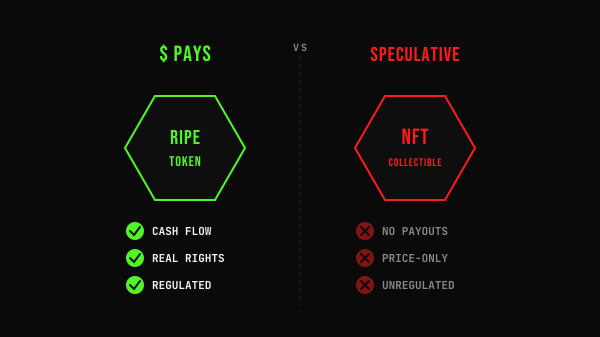
The income model of a typical music NFT is: you bought it cheap, hopefully someone wants to buy it from you for more later. That's it. It's a collectible with a speculative resale market, not an income-producing asset.
What a tokenized music royalty actually is
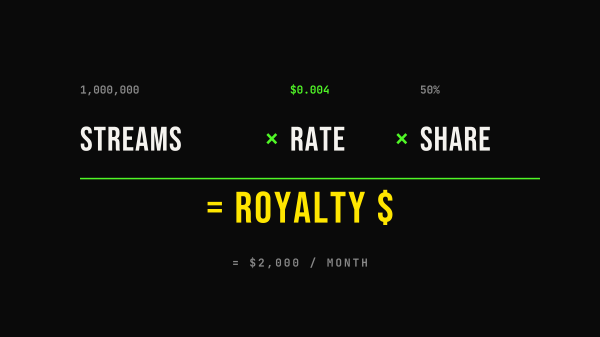
A tokenized music royalty is a digital share of an income stream. The token records that you own X% of the future royalties from a specific catalog of songs. Every time those songs are streamed, performed, or licensed, the catalog receives money, and your share is distributed to your account.
Concretely, on Ripe:
- A music catalog is structured as a legal entity that owns or licenses the right to receive royalties from a defined list of tracks.
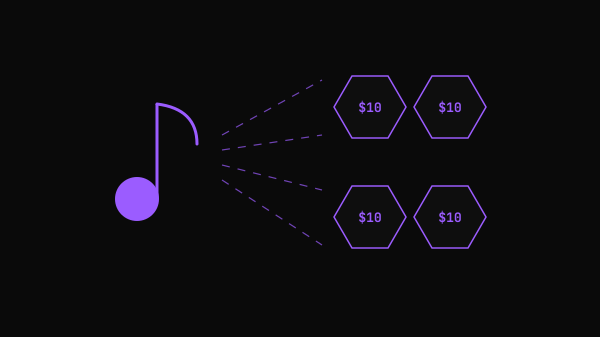
- That entity is tokenized — its income rights are split into fractional units, each represented as a token on the blockchain.
- You buy tokens. Each token gives you a contractual claim to a pro-rata share of the catalog's royalty income.
- The royalties flow into the catalog's collection account weekly. Smart contracts split the money according to token ownership and distribute it automatically.
The blockchain is doing two specific jobs here: it records ownership transparently (so the cap table can't be silently changed), and it executes distribution automatically (so you don't depend on a label's quarterly payment cycle). Neither of those jobs requires speculation or hype to make sense.
Side-by-side comparison
When NFTs make sense for fans
If you love an artist and want to support them while owning something digitally provable — an NFT can be a fine purchase. Treat it the way you'd treat a signed vinyl: an emotional asset that may or may not appreciate. Don't model it as a yield-bearing investment, because it almost certainly isn't.
When tokenized royalties make sense for investors
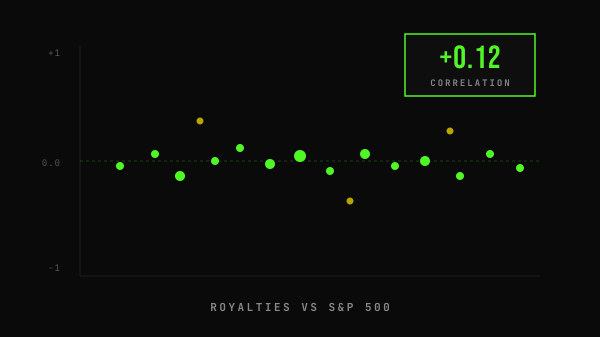
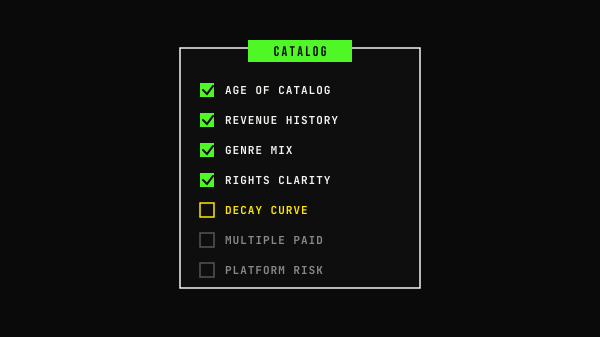
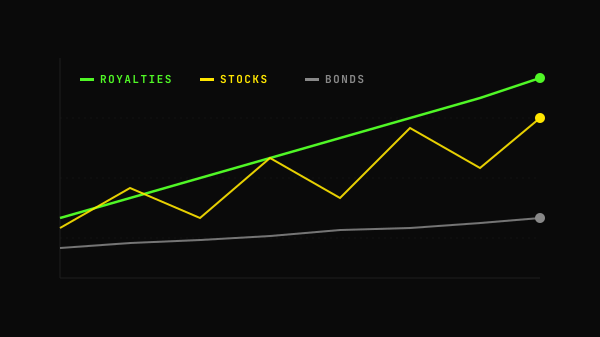
If you want exposure to music as an income asset class — predictable cash flows, low correlation with equities, fractional access from $10 — tokenized royalties are the right vehicle. The blockchain layer is plumbing, not the product. The product is the royalty stream itself, and the catalog you choose matters more than the technology behind the token.
FAQ
Is Ripe an NFT platform?
No. Ripe is an investment platform for tokenized music royalties. Tokens on Ripe represent fractional claims on royalty income from real music catalogs. They're not collectibles, not unique digital art, and not primarily speculative. The blockchain is used for transparent ownership and automated distribution — not for trading scarcity.
Can a music NFT also pay royalties?
Yes, in rare cases. Some artists have issued 'royalty NFTs' that combine collector status with a contractual right to a percentage of streaming income. These are functionally the same as tokenized royalties — the NFT framing is mainly marketing. They're a tiny share of the NFT market overall, but they're growing.
Can I move my royalty tokens to my own wallet?
Custody arrangements vary by platform. On Ripe, tokens are held in segregated user accounts. The mechanics of self-custody for retail users are evolving across the industry. Check the specific platform's terms before assuming you can transfer tokens off-platform.