How Spotify Streaming Turns Into Royalty Income – And What It Means for Investors

Spotify is the world's largest music streaming platform, with hundreds of millions of active users and tens of billions of streams occurring every month. Every one of those streams triggers a royalty payment. Understanding how that payment system works — and what it means in practice for catalog valuation and investor returns — is essential knowledge for anyone considering music royalty investments.
The basics: how Spotify pays for music
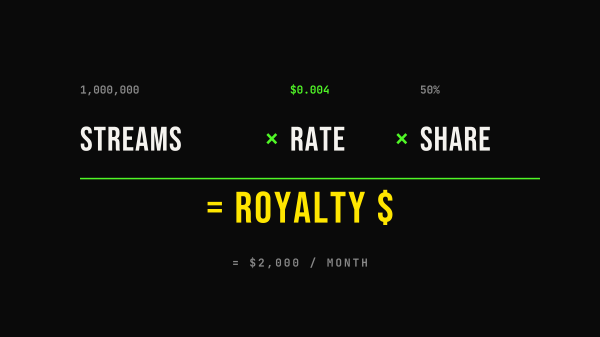
Spotify operates on what the industry calls a "pro-rata" royalty model. Rather than paying a fixed fee per stream, Spotify pools all the subscription and advertising revenue it collects in a given period, deducts its own costs and margin, and distributes the remainder to rights holders in proportion to their share of total streams on the platform during that period.
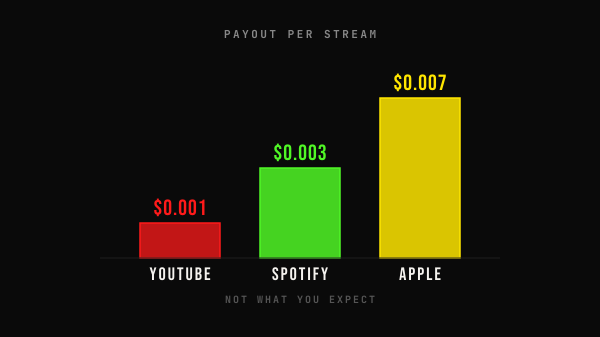
This means that the per-stream rate is not fixed — it fluctuates based on how much total revenue Spotify generates and how many total streams occur globally. In practice, this rate has historically been in a range of roughly $0.003 to $0.005 per stream for most rights holders, though the exact rate varies by territory, listener subscription tier, and the rights holder's specific deal structure.
For a song with 10 million streams in a year, that translates to roughly $30,000 to $50,000 in Spotify royalties alone — before the same streams generate additional royalties from Apple Music, Amazon Music, YouTube, Tidal, and dozens of other platforms operating in different territories worldwide.
The royalty distribution chain
The per-stream payment from Spotify does not flow directly to the artist or investor. It passes through a series of intermediaries before arriving at its final destination.
Spotify pays streaming royalties to music distributors and record labels — the entities that hold or have licensed the master recording rights to the song. For major label artists, this means Spotify pays the label (Universal Music Group, Sony Music, Warner Music, etc.), which then passes a contractually agreed share to the artist. The label retains the remainder as its margin for having funded the recording and distribution.
Independent artists who distribute their own music through digital distributors (like DistroKid, TuneCore, or CD Baby) receive a much higher share of streaming royalties — sometimes 80-100% of the revenue — because they are not sharing with a major label.
Separately, Spotify also pays publishing royalties to songwriters and publishers through collection societies. In the United States, this is handled primarily through organizations like ASCAP, BMI, and SESAC, which collect mechanical and performance royalties on behalf of songwriters and their publishers.
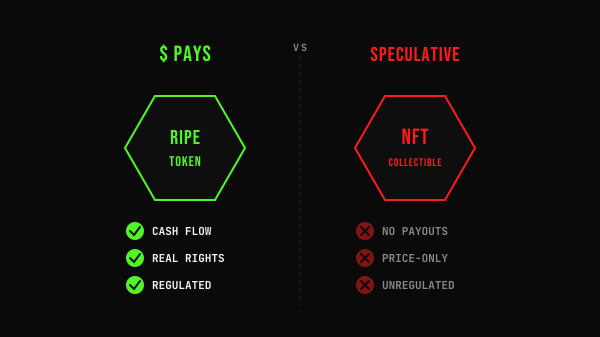
When Ripe tokenizes a music catalog, it is typically working with the master recording rights — the royalties that flow directly from Spotify and other streaming platforms to the entity that owns the recorded version of the song.
What "streaming data" actually tells you about a catalog
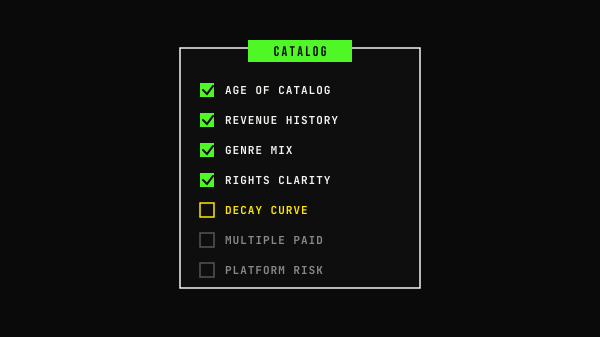
When evaluating a music catalog as an investment, historical streaming data is the primary input for estimating future royalty income. But streaming numbers require some nuance to interpret correctly.
Total lifetime streams
give you a sense of a catalog's overall reach and accumulated listening base. A song with 500 million total streams has demonstrated sustained appeal that a newer song simply cannot claim.
Monthly active streams
are more important than lifetime totals for understanding current income generation. A song that had its peak streaming moment five years ago and has since fallen to minimal plays is not a strong royalty income candidate, regardless of its lifetime total.
Streaming platform mix
matters because different platforms pay at different rates and have different user demographics. A catalog with strong performance across Spotify, Apple Music, and international platforms like Yandex Music or Anghami is more diversified and potentially more stable than one that is almost entirely dependent on a single platform in a single territory.
Playlist placement and algorithmic presence
have a significant impact on streaming volume. Songs that are featured regularly in Spotify's algorithmic playlists (like Discover Weekly or Release Radar) or on editorial playlists tend to maintain stronger ongoing stream counts than songs that rely solely on fans actively searching for them.
Ripe makes historical streaming data available for each catalog listed on its platform, allowing investors to evaluate these factors before committing capital.
From streams to investor income: the Ripe model
On the Ripe platform, streaming royalties follow a clear path from platform to investor.
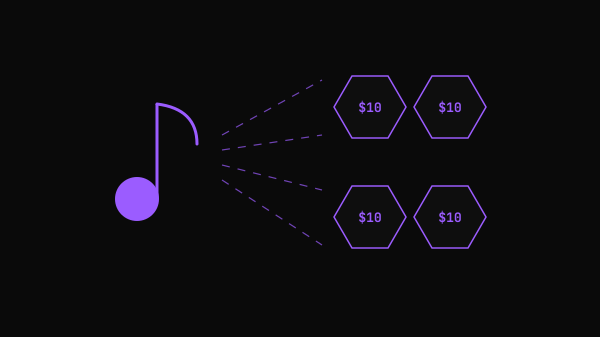
As songs in a tokenized catalog are streamed, royalties are collected through the standard industry channels and routed into the catalog's royalty pool. The Ripe smart contract then calculates each token holder's proportional share based on their ownership percentage and distributes payments to wallets weekly.
This weekly distribution cycle is significantly faster than the traditional music industry timeline, where royalties can take six months or more to travel from platform to rights holder due to the number of intermediaries involved. Ripe's blockchain-based infrastructure compresses this settlement cycle substantially.
How to think about yield and return expectations
Investors evaluating music royalty catalogs often want to understand what kind of annual yield to expect from their investment. This is a reasonable question, but it is important to approach it with appropriate nuance.
The yield on a music royalty investment depends on the relationship between the price paid for the tokens and the ongoing royalty income the catalog generates. A catalog generating $100,000 in annual royalties might be priced at $1,000,000, implying a 10% yield — but that yield is only realized if the catalog maintains its streaming performance.
Music royalty catalogs are sometimes valued using multiples of their trailing 12-month royalty income (called NPS, or Net Publisher's Share, multiples in the publishing world). These multiples have varied significantly over the years based on interest rates, investor appetite for alternative income assets, and the overall performance of the streaming market.
What investors should focus on is not just the stated yield, but the durability of the underlying income stream. A catalog with consistent streaming performance across multiple years, strong playlist presence, and diversification across multiple songs and territories is a much stronger foundation for yield expectations than a catalog built around a single viral hit that may not maintain its momentum.
The role of other platforms
While Spotify is the world's largest streaming platform by subscriber count, it is far from the only source of streaming royalties. Apple Music, Amazon Music Unlimited, Tidal, Deezer, and a range of regional platforms collectively contribute a meaningful share of streaming royalty income.
YouTube is particularly significant because of its scale and the fact that it pays royalties both for official music video content and for user-generated content that includes copyrighted music. While YouTube's per-stream rates are generally lower than premium audio streaming platforms, the sheer volume of YouTube listening can contribute meaningfully to total royalty income for popular catalogs.
Sync licensing — the use of music in TV shows, films, advertisements, video games, and other media — is another potential income source for music catalogs that is separate from streaming royalties. A song that is licensed for use in a popular advertisement or streaming show can generate a significant one-time or recurring payment. While harder to predict than streaming income, sync licensing can meaningfully supplement streaming royalties for catalogs with strong commercial appeal.
The bottom line for investors
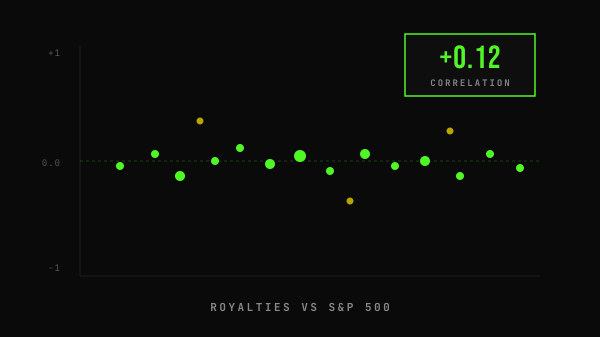
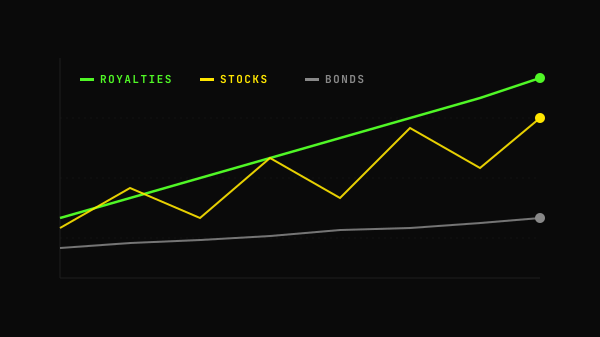
Understanding how streaming royalties work — from the per-stream payment at Spotify to the weekly distribution in your Ripe wallet — gives investors a much clearer picture of what they are actually buying when they invest in a tokenized music catalog. The income is real, traceable, and tied to measurable underlying activity. That combination of transparency and recurring cash flows is precisely why music royalties have become an increasingly discussed asset class among investors looking beyond traditional stocks and bonds.
As with any investment, streaming performance can decline and past results do not guarantee future income. Please review all terms and risk disclosures before investing.